If you’ve recently had surgery, suffered an injury, or are recovering from a medical condition, your doctor may recommend either physical therapy (PT) or occupational therapy (OT).
At first glance, the two professions seem almost identical. Both involve rehabilitation, personalized treatment plans, and helping people regain independence.
However, they focus on different aspects of recovery.
Physical therapy is primarily about improving how your body moves, while occupational therapy helps you perform the activities that matter most in everyday life.
Understanding the difference can help you choose the right type of care—or recognize when you may benefit from both.
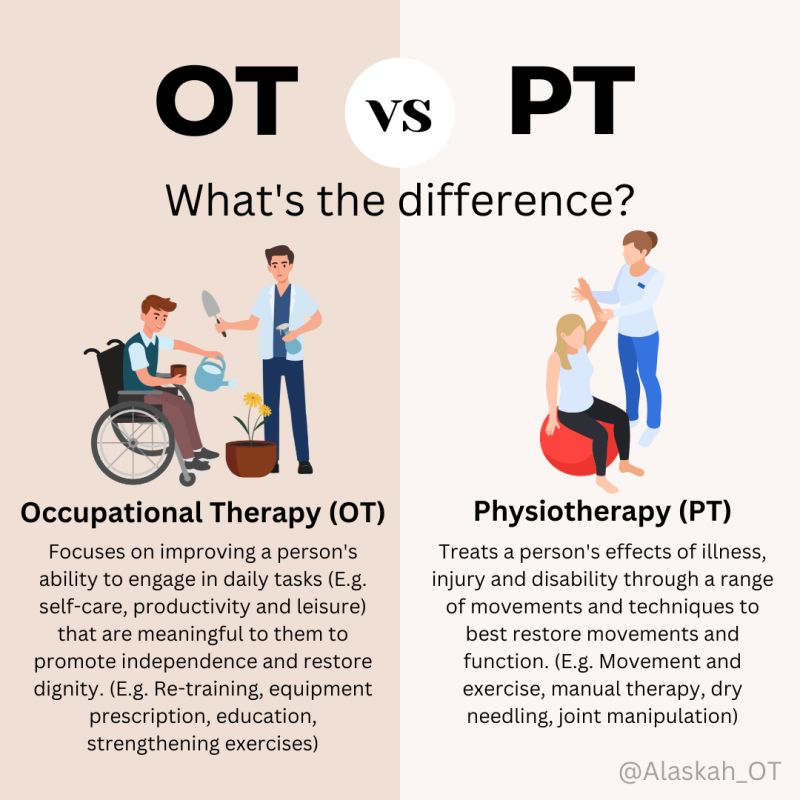
Quick Comparison
| Physical Therapy | Occupational Therapy |
|---|---|
| Focuses on movement, mobility, strength, and pain relief | Focuses on daily living skills and independence |
| Treats muscles, joints, bones, and movement disorders | Helps people perform everyday activities safely |
| Often used after injuries, surgeries, or sports injuries | Often used after strokes, neurological conditions, or hand injuries |
| Goal: Improve physical function | Goal: Improve functional independence |
What Is Physical Therapy?
Physical therapy focuses on restoring movement and improving the body’s ability to function.
A physical therapist evaluates how your muscles, joints, nerves, and balance work together before creating an individualized treatment plan.
Treatment often includes:
- Therapeutic exercises
- Manual therapy
- Stretching
- Balance training
- Strength training
- Gait (walking) training
- Posture correction
- Injury prevention education
The primary goal is to help patients move with less pain and greater confidence.
Common Conditions Treated by Physical Therapists
Physical therapists frequently help patients recovering from:
- Lower back pain
- Neck pain
- Knee injuries
- Hip pain
- Shoulder injuries
- Sports injuries
- Arthritis
- Balance disorders
- Joint replacement surgery
- ACL reconstruction
- Rotator cuff tears
- Ankle sprains
- Chronic pain
They also work with patients recovering from fractures, spinal conditions, and neurological disorders.
What Is Occupational Therapy?
Occupational therapy focuses on helping people perform the activities they need or want to do every day.
In healthcare, the word “occupation” refers to meaningful daily activities—not just employment.
An occupational therapist helps patients regain the skills needed for:
- Dressing
- Bathing
- Cooking
- Writing
- Using a computer
- Driving
- Returning to work
- Childcare
- Household tasks
- School activities
OT aims to increase independence while improving safety and confidence.
Common Conditions Treated by Occupational Therapists
Occupational therapists often work with patients who have:
- Stroke
- Parkinson’s disease
- Multiple sclerosis
- Hand injuries
- Carpal tunnel syndrome
- Traumatic brain injury
- Spinal cord injury
- Arthritis affecting the hands
- Developmental disorders
- Cognitive impairments
Many occupational therapists also specialize in hand therapy and upper-extremity rehabilitation.
The Biggest Difference
The simplest way to understand the distinction is this:
Physical therapy asks:
“Can your body move better?”
Occupational therapy asks:
“Can you safely perform the activities that matter most in your life?”
For example:
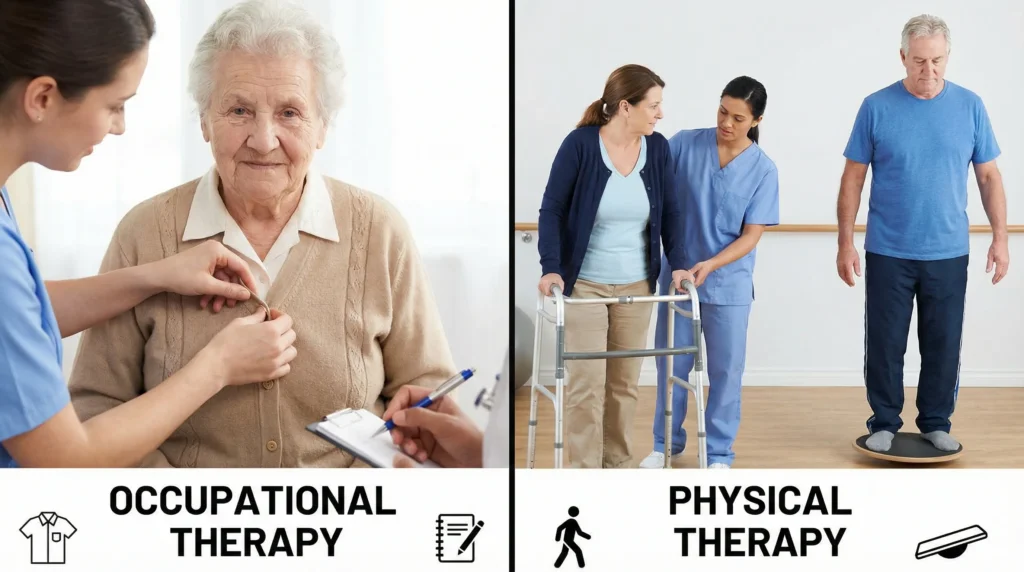
After knee replacement surgery, a physical therapist helps you walk normally again.
An occupational therapist helps you safely get into the shower, climb stairs at home, dress independently, and return to everyday routines.
Both are working toward recovery—but from different perspectives.
When You Might Need Physical Therapy
Physical therapy may be appropriate if you’re experiencing:
- Difficulty walking
- Joint pain
- Muscle weakness
- Poor balance
- Limited range of motion
- Sports injuries
- Post-surgical rehabilitation
- Chronic back or neck pain
PT focuses on restoring strength, mobility, and physical performance.
When You Might Need Occupational Therapy
Occupational therapy may be more appropriate if you’re having trouble:
- Buttoning a shirt
- Holding utensils
- Cooking safely
- Returning to work
- Using your hands effectively
- Completing household tasks
- Performing self-care activities
OT also helps people adapt their environment using assistive devices or ergonomic strategies when necessary.
Can You Receive Both Physical Therapy and Occupational Therapy?
Absolutely.
Many patients benefit from receiving both services simultaneously.
Examples include:
After a Stroke
Physical Therapy
- Improve walking
- Strengthen the legs
- Improve balance
Occupational Therapy
- Regain hand function
- Practice dressing
- Improve eating and writing skills
- Increase independence at home
After Joint Replacement
Physical Therapy
- Restore strength
- Improve walking
- Increase joint mobility
Occupational Therapy
- Learn safer ways to bathe and dress
- Use adaptive equipment
- Return to daily activities
After a Serious Injury
PT and OT often work together so patients regain both movement and independence.
Which Therapy Is Better?
Neither is “better.”
They’re designed to solve different problems.
If your main goal is reducing pain and improving movement, physical therapy is usually the better fit.
If your biggest challenge is completing everyday activities safely and independently, occupational therapy may be more appropriate.
In many cases, the most effective rehabilitation program includes both.
What Happens During Your First Appointment?
Physical Therapy Evaluation
Your therapist may assess:
- Strength
- Flexibility
- Balance
- Walking
- Joint mobility
- Pain levels
- Functional movement
You’ll typically receive exercises and a personalized treatment plan.
Occupational Therapy Evaluation
Your therapist may evaluate:
- Daily routines
- Hand function
- Fine motor skills
- Grip strength
- Coordination
- Cognitive function (when appropriate)
- Home or workplace challenges
Treatment focuses on helping you perform daily tasks more efficiently and safely.
Frequently Asked Questions
No. Occupational therapists treat patients of all ages, including children, adults, and seniors.
Yes. Physical therapy often helps improve strength, flexibility, balance, and pain management for people living with arthritis.
Many private insurance plans, Medicare, and Medicaid cover medically necessary physical therapy and occupational therapy. Coverage varies by plan, so it’s important to verify your benefits.
Yes. Many patients receive both therapies as part of a comprehensive rehabilitation program.
That depends on your recovery goals. Physical therapy typically focuses on restoring movement and strength, while occupational therapy helps you safely return to daily activities.
Physical therapy and occupational therapy are complementary—not competing—healthcare services.
If your priority is moving better, reducing pain, and regaining strength, physical therapy is often the first step.
If your priority is living more independently, returning to work, or performing everyday activities with confidence, occupational therapy may provide the greatest benefit.
For many people recovering from surgery, injury, or neurological conditions, combining both therapies leads to the best long-term outcomes.