Twist your ankle during a weekend basketball game.
Feel a sharp pain in your shoulder after serving a tennis ball.
Develop knee pain while training for a marathon.
Who should you see first—a sports medicine doctor or a physical therapist?
It’s a common question, especially for active adults and athletes who want to recover quickly and get back to training.
Although Sports Medicine and Physical Therapy often work together, they play very different roles in diagnosing injuries, creating treatment plans, and helping patients return to activity.
Understanding what each professional does can save you time, reduce unnecessary appointments, and lead to faster recovery.
The Short Answer
If you need a diagnosis, imaging, medication, or medical management, Sports Medicine is often the right place to start.
If you already know your injury—or your main goal is reducing pain, restoring movement, and rebuilding strength—Physical Therapy may be the better first step.
Many patients benefit from both.
What Is Sports Medicine?
Sports Medicine is a medical specialty focused on preventing, diagnosing, and treating injuries related to physical activity.
Despite the name, sports medicine physicians don’t only treat professional athletes.
Their patients include:
- Recreational runners
- High school athletes
- Office workers
- Active older adults
- Fitness enthusiasts
- People recovering from orthopedic injuries
A sports medicine physician is licensed to:
- Diagnose injuries
- Order X-rays and MRIs
- Interpret imaging results
- Prescribe medications
- Perform joint injections
- Recommend surgery when necessary
- Coordinate rehabilitation
Conditions Commonly Treated
Sports medicine physicians frequently evaluate:
- ACL tears
- Meniscus injuries
- Rotator cuff tears
- Shoulder instability
- Tennis elbow
- Stress fractures
- Concussions
- Achilles tendon injuries
- Hip labral tears
- Running injuries
For example, an athlete with a suspected ACL tear may first visit a sports medicine physician to confirm the diagnosis before beginning rehabilitation.
What Is Physical Therapy?
Physical Therapy focuses on restoring movement, improving strength, reducing pain, and helping patients return safely to everyday activities or sports.
Unlike sports medicine physicians, physical therapists don’t diagnose conditions through imaging or prescribe medication.
Instead, they evaluate how your body moves and develop personalized rehabilitation programs.
Treatment may include:
- Manual therapy
- Therapeutic exercise
- Balance training
- Strengthening
- Mobility work
- Dry needling (where permitted)
- Gait analysis
- Return-to-sport programs
The goal isn’t simply to eliminate pain—it’s to address the underlying movement problems that contributed to the injury.
Real-Life Example #1: Runner With Knee Pain
Sarah is training for her first half marathon.
After increasing her weekly mileage, she develops pain around the front of her knee.
Sports Medicine Approach
A physician evaluates her knee, rules out serious structural damage, and determines that advanced imaging isn’t necessary.
Physical Therapy Approach
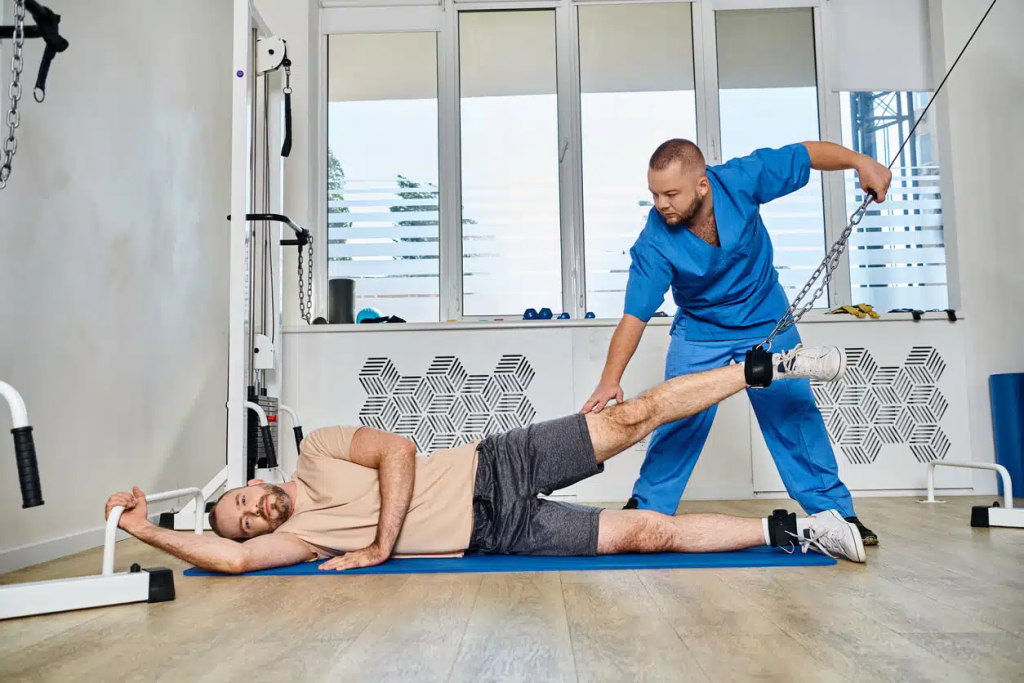
Her therapist analyzes her running mechanics and discovers:
- Weak hip muscles
- Poor single-leg stability
- Limited ankle mobility
Rather than simply resting, Sarah follows a strengthening program and gradually returns to running with improved mechanics.
Real-Life Example #2: Shoulder Injury During Pickleball
Mark feels a sharp pain while reaching overhead during a pickleball match.
A sports medicine physician suspects a rotator cuff injury and orders an MRI.
After confirming that surgery isn’t needed, Mark begins physical therapy to:
- Restore shoulder mobility
- Improve rotator cuff strength
- Correct movement patterns
- Return safely to the court
This is one of the most common ways Sports Medicine and Physical Therapy work together.
Side-by-Side Comparison
| Sports Medicine | Physical Therapy |
|---|---|
| Diagnoses injuries | Treats movement dysfunction |
| Orders X-rays and MRI | Improves strength and mobility |
| Prescribes medication | Prescribes therapeutic exercises |
| Performs injections | Provides hands-on rehabilitation |
| Determines whether surgery is needed | Helps patients avoid surgery when appropriate |
| Manages overall medical care | Guides recovery and injury prevention |
Which One Should You See First?
Start With Sports Medicine If…
- You heard a “pop” during an injury.
- You can’t bear weight.
- Your joint is severely swollen.
- You suspect a fracture.
- You need imaging.
- Your symptoms appeared suddenly after trauma.
- You may require medication or injections.
Start With Physical Therapy If…
- Your pain developed gradually.
- You have stiffness or reduced flexibility.
- You’re recovering after surgery.
- You have recurring sports injuries.
- You want to improve movement and prevent future injuries.
- You have been cleared by your physician but still have pain or weakness.
In many states, patients can schedule an appointment with a physical therapist without first seeing a physician, although insurance requirements vary.
When Both Professionals Work Together
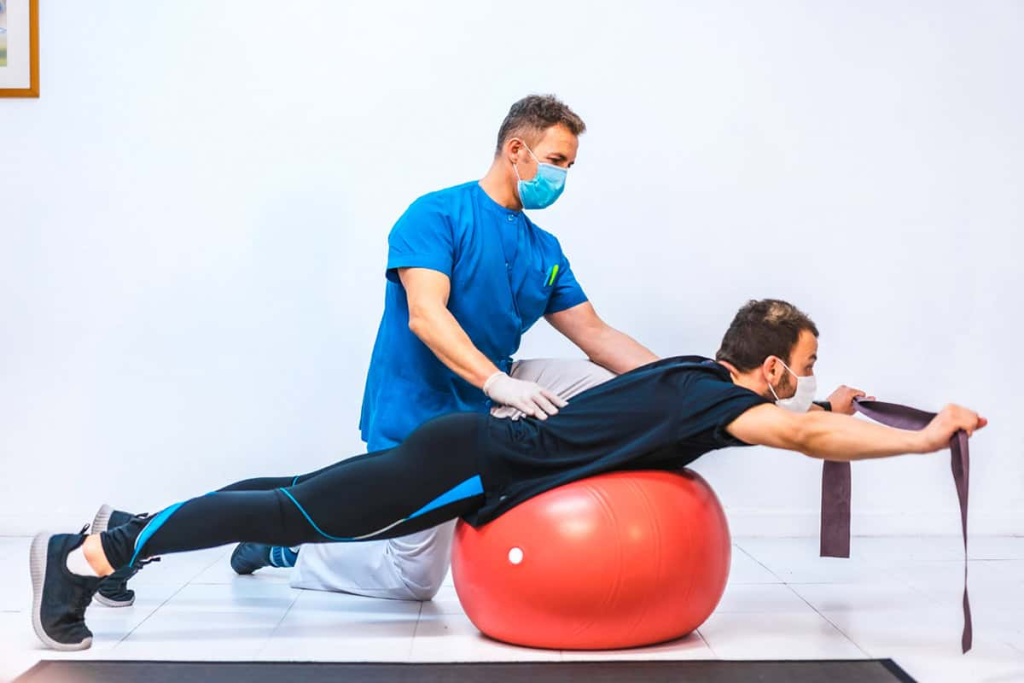
The best outcomes often happen when sports medicine physicians and physical therapists collaborate.
A typical recovery pathway may look like this:
Week 1
Sports medicine physician:
- Diagnoses the injury
- Orders imaging if needed
- Rules out serious conditions
Week 2–8
Physical therapist:
- Controls pain
- Restores mobility
- Rebuilds strength
- Improves balance
- Corrects movement patterns
Week 8–16
Physical therapist:
- Sport-specific drills
- Plyometrics
- Agility training
- Return-to-play testing
This team approach is common for athletes recovering from ACL reconstruction, shoulder injuries, ankle sprains, and tendon problems.
Where Can You Find Both Services?
Many large orthopedic and sports medicine centers offer both sports medicine physicians and physical therapists under one roof.
For example:
Vanderbilt Sports Medicine
Address:
1215 21st Avenue South, Medical Center East, South Tower, Suite 3200, Nashville, TN 37232
Vanderbilt’s sports medicine program brings together orthopedic surgeons, primary care sports medicine physicians, athletic trainers, and physical therapists. Patients can often move seamlessly from diagnosis to rehabilitation without visiting multiple healthcare systems.
Hospital for Special Surgery (HSS) Sports Medicine Institute
Address:
610 West 58th Street, New York, NY 10019
HSS is internationally recognized for orthopedic care and sports medicine. Athletes—from recreational runners to elite professionals—often receive coordinated care from sports medicine physicians and physical therapists throughout their recovery.
These integrated programs make communication between providers easier and help ensure rehabilitation progresses according to the patient’s diagnosis and goals.
Frequently Asked Questions
Is Sports Medicine only for athletes?
No. Sports medicine physicians treat anyone with musculoskeletal injuries, including office workers, older adults, and people who exercise recreationally.
Can a physical therapist diagnose my injury?
Physical therapists evaluate movement and can identify signs of many musculoskeletal conditions. However, they generally do not diagnose conditions using imaging or prescribe medications.
Can physical therapy help me avoid surgery?
For many conditions—such as tendon injuries, muscle strains, mild arthritis, and some meniscus problems—physical therapy may improve symptoms enough that surgery is unnecessary. However, severe injuries like complete ligament tears or displaced fractures may still require surgical treatment.
Should I see both?
Often, yes. A sports medicine physician can establish the diagnosis and medical management, while a physical therapist guides the rehabilitation process and helps you safely return to activity.
Choosing between Sports Medicine and Physical Therapy isn’t about deciding which profession is better—it’s about understanding where you are in your recovery.
If you need a medical diagnosis, imaging, or treatment for an acute injury, a sports medicine physician is usually the best first stop.
If your goal is to move better, rebuild strength, reduce pain, and get back to the activities you love, physical therapy is often the next essential step.
When both professionals work together, patients frequently experience a smoother recovery and a safer return to sports, work, and everyday life.
Related Articles
- Physical Therapy vs Occupational Therapy: What’s the Difference and Which One Do You Need?
- Home Health vs Outpatient Physical Therapy: Which One Is Right for Your Recovery?
- Can Physical Therapy Actually Prevent Surgery? What Patients Should Know Before Going Under the Knife