
Pain isn’t always the first warning that something is wrong.
Sometimes your body gives you much quieter signals: a shoulder that no longer moves the way it used to, a knee that feels unstable on stairs, or a lower back that becomes tired after standing for only a short time.
These changes are easy to dismiss, especially when they don’t interfere with your daily life yet.
But early movement problems can become harder to manage when you continue ignoring them. Physical therapy isn’t only for people recovering from major injuries or surgery. It can also help identify weaknesses, mobility limitations, balance problems, and movement patterns before they significantly affect your quality of life.
Here are seven signs that it may be time to consider a physical therapy evaluation.

1. You Keep Avoiding Certain Movements
Have you stopped doing things you used to do without thinking?
Maybe you no longer:
- Take the stairs
- Play recreational sports
- Lift heavy groceries
- Kneel in the garden
- Go on long walks
- Reach overhead
You may not consider yourself “injured,” but avoiding specific movements can indicate that your body isn’t functioning as comfortably as it should.
A physical therapist can determine whether pain, weakness, stiffness, or fear of movement is limiting you.
2. You Feel Stiff After Sitting
Getting up after a long meeting and feeling slightly stiff is common.
But if your hips, knees, or back consistently feel tight after sitting, your mobility may need attention.
This is particularly common among people who spend most of the workday at a desk.
Instead of simply stretching when discomfort appears, a physical therapist can assess whether you have limitations in:
- Hip mobility
- Ankle flexibility
- Spinal movement
- Muscle strength
- Posture
The goal is to address the movement limitation rather than repeatedly treating the symptom.
3. Your Balance Isn’t What It Used to Be
Balance problems don’t necessarily mean you’re about to fall.
You might first notice that:
- Standing on one leg feels difficult.
- You hold onto furniture when walking around the house.
- Uneven sidewalks make you uncomfortable.
- You feel less confident going downstairs.
Balance depends on strength, coordination, vision, joint mobility, and your nervous system working together.
Physical therapists can assess these factors and create exercises designed to improve stability.
4. One Side of Your Body Feels Weaker
Try carrying a bag with each hand.
Does one side feel noticeably stronger?
Or perhaps one leg feels less stable when climbing stairs.
Strength differences between the left and right sides aren’t always obvious until you perform certain movements.
After an injury, surgery, or period of inactivity, one side may become weaker while the other compensates.
Addressing this imbalance can be an important part of injury prevention and rehabilitation.
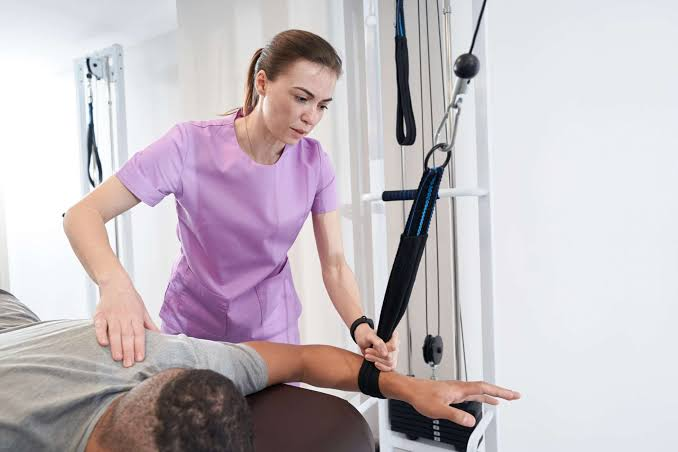
5. Your Pain Keeps Coming Back
This is one of the biggest signs people tend to overlook.
The pain disappears.
Then it returns.
You rest again.
It improves.
Then the same problem comes back when you resume normal activity.
This cycle can occur with:
- Back pain
- Shoulder pain
- Knee pain
- Achilles problems
- Tennis elbow
- Hip pain
Repeated symptoms may indicate that the underlying movement or strength problem hasn’t been addressed.
6. Everyday Tasks Are Becoming Harder
You don’t have to be an athlete to benefit from physical therapy.
Pay attention if ordinary activities are becoming unexpectedly difficult.
For example:
Before: You could stand in the kitchen for an hour.
Now: Your back starts hurting after 15 minutes.
Before: You could climb three flights of stairs.
Now: Your knees feel weak halfway up.
Before: You could reach the top shelf easily.
Now: Your shoulder becomes painful.
These gradual changes can be more meaningful than a single episode of soreness.
7. You Don’t Feel Fully Recovered After an Injury
You may have returned to work or exercise, but something still doesn’t feel right.
Perhaps:
- Your knee feels weaker than before.
- Your shoulder isn’t moving normally.
- You hesitate when changing direction.
- Your ankle feels unstable.
- You’re afraid of reinjuring yourself.
Being able to perform an activity doesn’t necessarily mean you’ve completely recovered.
Physical therapy can help rebuild strength, coordination, confidence, and movement quality.
Physical Therapy Isn’t Just About Treating Pain
One misconception is that you need significant pain before seeing a physical therapist.
That’s not necessarily true.
Physical therapists also work on prevention and performance.
Depending on your goals, treatment may focus on:
- Strength
- Mobility
- Balance
- Coordination
- Posture
- Movement mechanics
- Injury prevention
- Sports performance
For an active person, this can mean identifying weaknesses before they become an injury.
For an older adult, it may mean improving balance and leg strength to maintain independence.
What Happens During a Physical Therapy Evaluation?
Your first appointment typically begins with a conversation about your symptoms, activity level, medical history, and goals.
The therapist may then examine:
- Range of motion
- Muscle strength
- Balance
- Walking mechanics
- Joint mobility
- Functional movements
- Posture
You may then receive a treatment plan based on the findings.
This could include supervised exercises, manual therapy, education, and a home exercise program.
You Don’t Have to Wait Until You’re Injured
One of the most useful ways to think about physical therapy is as a tool for maintaining function, not simply recovering from injury.
If you’re noticing small changes in how you walk, exercise, climb stairs, lift objects, or perform daily activities, those changes are worth paying attention to.
Your body doesn’t always send a dramatic warning.
Sometimes the warning is simply:
“This movement doesn’t feel as easy as it used to.”
That may be the right time to find out why.
When Should You Seek Medical Evaluation Instead?
Physical therapy is appropriate for many musculoskeletal and movement-related problems, but some symptoms require prompt medical evaluation.
Seek medical attention for symptoms such as:
- Severe or sudden unexplained pain
- Significant trauma
- Suspected fracture
- New severe weakness
- Loss of bladder or bowel control
- Sudden neurological symptoms
- Severe swelling or deformity
A physical therapist can also refer you to another healthcare professional when your symptoms require additional medical evaluation.
Frequently Asked Questions
Yes. Physical therapists treat mobility limitations, weakness, balance problems, and movement dysfunction—not just severe pain.
No. Patients range from office workers and older adults to recreational athletes and people recovering from surgery.
It can help reduce certain injury risks by addressing strength deficits, mobility restrictions, balance problems, and movement patterns.
If you’re experiencing a movement-related or musculoskeletal problem, a physical therapist may be an appropriate starting point. However, severe, unexplained, or traumatic symptoms may require medical evaluation first.
You don’t have to wait for an injury to become serious before doing something about it.
Persistent stiffness, recurring pain, declining balance, weakness, and difficulty with everyday movements can all be signs that your body needs attention.
The earlier you identify a movement problem, the more options you may have for addressing it.
For many people, physical therapy can be a practical way to restore mobility, build strength, and stay active before a small problem becomes a major interruption to daily life.
Related Articles
- Why Does My Back Hurt When Standing Too Long?
- Your Back May Not Be the Problem: The Hidden Muscle Behind Lower Back Pain
- What Happens If You Never Recover Properly?